The Art of Disappearing: How Vanessa Packer Stays Grounded When the Whole World Is Watching
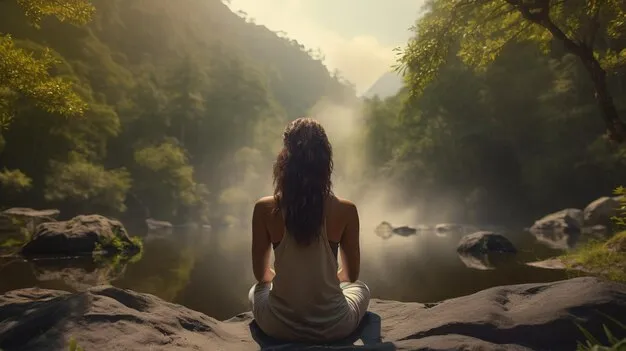
Photo: woman peaceful quiet moment alone nature mental wellness self care, via img.freepik.com
There's a particular kind of exhaustion that comes with being perceived all the time. It's not the tired-from-working kind — that one's almost easier to deal with. It's the deeper fatigue of knowing that everything you say, post, or do is being watched, interpreted, and filed away by an audience that feels entitled to all of it.
Vanessa Packer knows that fatigue well. And more importantly, she's figured out what to do about it.
In an industry that tends to treat burnout as a badge of honor and privacy as something you trade away for relevance, Vanessa has taken a different road. She's built a life where she can be genuinely public when she wants to be — and genuinely gone when she needs to be. That balance, it turns out, is harder to strike than it sounds.
The Cost of Constant Visibility
Let's start with the reality that doesn't get talked about enough: being a public figure in the digital age is genuinely taxing in ways that didn't exist a generation ago. It's not just about managing a press cycle or doing interviews. It's about living with a version of yourself that exists independently of you — an online presence that people respond to, argue about, and project onto 24 hours a day, whether you're paying attention or not.
The psychological research on this is pretty clear. Sustained public scrutiny activates the same stress responses as other kinds of social threat. When you add in the ambient pressure of social media — the metrics, the comments, the constant comparison — the cumulative effect on mental health can be significant, even for people who seem to be thriving.
Vanessa has never pretended that side of her life doesn't exist. She's been open about the fact that visibility has a weight to it, and that managing that weight is something she actively works at — not something that just happens.
What "Off the Clock" Actually Means for Her
One of the things that distinguishes Vanessa's approach is that she treats her private life as genuinely private — not as content waiting to be packaged, and not as something she needs to justify to anyone.
That might sound obvious, but in the creator and entertainment space, the pressure to document everything is relentless. The logic goes: if it's not shared, did it even happen? Does it count as real if there's no post about it?
Vanessa has pushed back against that logic pretty firmly. The relationships she values most — close friendships, family connections, the people who knew her before any of this — exist almost entirely outside her public presence. That's not a coincidence. It's a deliberate choice to protect something that social media exposure tends to erode: the experience of just being a person without an audience.
Friends who've spoken about her describe someone who is fully present when she's with the people she cares about. No half-attention, no mentally composing the caption for later. Just actually there. In a world where attention is constantly being pulled in seventeen directions, that kind of presence is its own form of self-care.
Saying No as a Wellness Practice
If there's one habit that comes up most often when people close to Vanessa describe how she stays sane, it's this: she says no. A lot. And she doesn't over-explain it.
In an industry where every opportunity feels like it might be the last one, and where the fear of missing out is practically a professional hazard, that's harder than it sounds. Saying no to a collaboration, a press opportunity, or a public appearance requires a level of self-trust that most people spend years developing.
Vanessa has talked about learning to treat her time and energy as finite resources — not in a cold, transactional way, but in the sense that she recognizes what gets depleted when she overextends, and she takes that seriously. A commitment that would have been exciting a year ago might be a drain right now. A project that looks good on paper might not align with where she actually is. Knowing the difference, and acting on it, is a skill.
For fans who watch her navigate this, there's something quietly instructive about it. In a culture that constantly tells us to hustle harder and be available always, watching someone successfully model the opposite is genuinely useful.
Pushing Back on Parasitic Fan Culture
Here's a conversation that doesn't happen enough in fan spaces: the difference between loving someone's work and feeling entitled to their entire life.
Vanessa has been thoughtful — and occasionally direct — about this distinction. She appreciates her fans deeply. That's obvious in how she engages with her community and the care she puts into her work. But she's also been willing to gently push back when fan behavior crosses from appreciation into something more consuming.
The entitlement dynamic that can develop in parasocial relationships — the sense that because you've followed someone for years, you've earned access to their private life, their opinions on everything, their unfiltered self at all times — is something she's navigated carefully. Not by shutting down or going cold, but by consistently modeling what healthy engagement actually looks like.
That modeling matters. When a public figure handles these moments with grace and clarity, it can genuinely shift how fans think about the relationship. It reframes fandom from something extractive into something more reciprocal and ultimately more satisfying.
Building a Life That Can Last
Underneath all of it, what Vanessa seems to be doing is building a career that's sustainable — not just commercially, but humanly. The entertainment and creator industries are littered with cautionary tales of people who burned bright and then burned out, who gave everything to the public and had nothing left for themselves.
Vanessa is clearly paying attention to those stories. The choices she makes around privacy, mental health, and personal limits aren't just self-protective in the short term. They're investments in a version of herself that can still be doing meaningful work ten, twenty years from now.
There's something refreshing about that long-game thinking. In an industry obsessed with right now, she seems genuinely oriented toward what lasts.
And honestly? That might be the most aspirational thing about her.